Phone Signal at Masada & Dead Sea: Connectivity Guide
Ensure reliable phone signal at Masada and the Dead Sea. Get 5G/4G data via eSIM Israel for instant connectivity at the lowest point on Earth.
Understanding Desert Connectivity in 2026
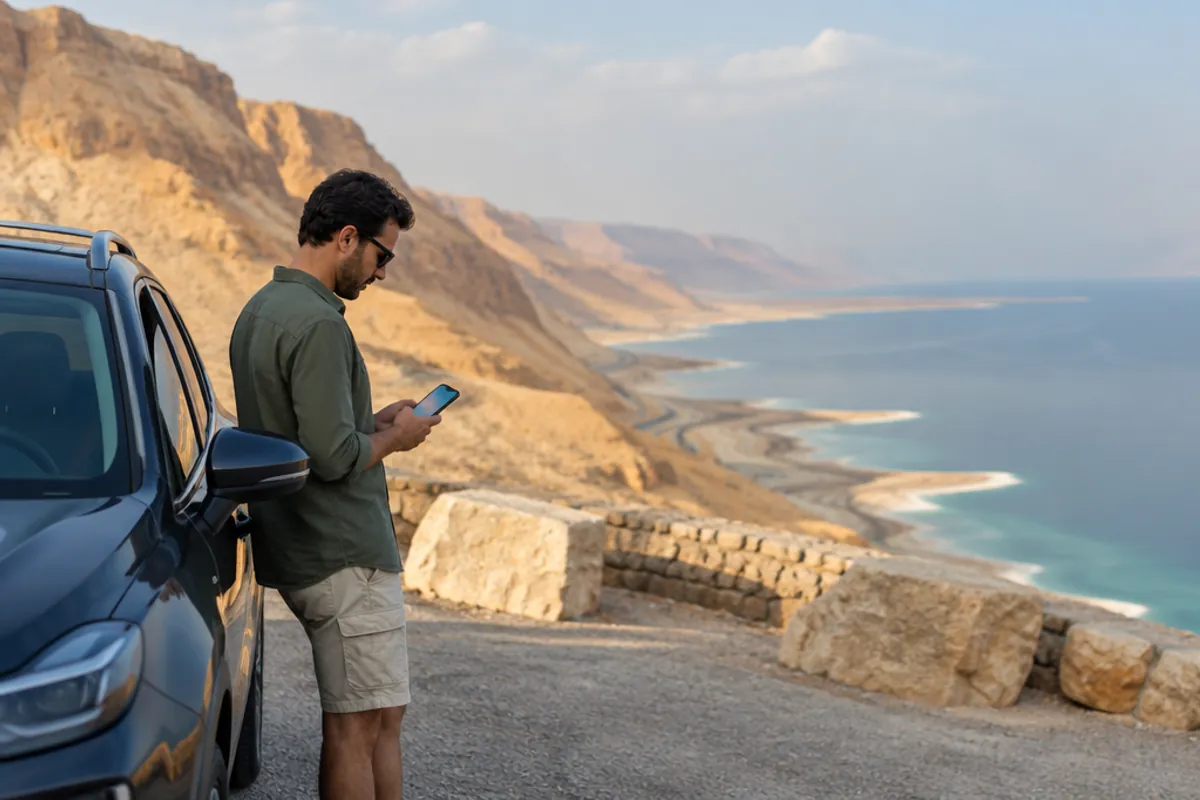
When planning a journey to the Judean Desert, specifically to the iconic plateau of Masada and the saline waters of the Dead Sea, connectivity is often a primary concern for modern travelers. In 2026, mobile infrastructure in Israel has reached a level of maturity where even the lowest point on Earth and remote desert fortresses enjoy significant 5G and 4G coverage. However, the unique topography of these regions—towering cliffs, deep basins, and vast open spaces—can still present specific challenges for mobile signal propagation.
For those relying on GPS for navigation, sharing real-time photos of the sunrise over the Moab Mountains, or maintaining a line of communication for safety, understanding how phone signals behave in this environment is essential. Utilizing a local Israel eSIM provides the most reliable access to the domestic networks that service these specific geographical areas, bypassing the limitations of international roaming.
Getting ready for your trip to Israel?
Pick a plan that matches how long you are staying, and arrive already connected.
- from $28.99Choose
Basic · 20 GB
7 to 60 days
- from $34.99Choose
Medium · 50 GB
Most popular - from $44.99Choose
Pro · 100 GB
7 to 60 days
- Israeli number included
- eSIM by email in 2 minutes
- WhatsApp support
Mobile Reception at the Masada Fortress
Masada stands approximately 400 meters above the Dead Sea, offering a vantage point that is actually beneficial for mobile signal reception. Because the summit is high and relatively flat, it has clear line-of-sight to various cellular towers positioned along Route 90 and the surrounding elevations. Most travelers find that 5G data is readily available at the Masada visitor center and even at the summit ruins.
Whether you are ascending via the Snake Path or taking the cable car, you can generally expect consistent signal. The Snake Path, which winds up the eastern face, is well-covered. However, there are small "shadow zones" directly against the rock face where the signal might dip briefly to 3G or 2G. Once you reach the top, the wide-open space allows for excellent 4G and 5G speeds, perfect for uploading high-resolution media. Using an eSIM from a local operator ensures you are connected to the strongest available tower, rather than being stuck on a roaming partner with lower priority.
Signal Strength at the Dead Sea Basin
The Dead Sea presents a more complex scenario for radio waves. At nearly 430 meters below sea level, the basin is enclosed by the Judean Mountains to the west and the Moab Mountains to the east. This creates a natural "bowl" that can sometimes trap or reflect signals in unexpected ways. In 2026, the resort area of Ein Bokek is fully equipped with high-density cellular infrastructure, providing robust 5G coverage to the beaches and surrounding facilities.
If your itinerary includes more remote sections of the coast, such as the areas near Ein Gedi or the various public beaches further north, the signal remains generally strong along Route 90. However, as you move closer to the water's edge in less developed spots, the signal may fluctuate. The dense, mineral-rich air of the Dead Sea basin does not significantly interfere with modern 5G frequencies, but the physical barrier of the mountains can cause signal drops if you hike deep into the wadis (canyons) like Wadi Arugot or Wadi David. In these canyons, you should expect to lose signal entirely at certain points, making offline maps a necessity.
Technical Solutions: eSIM for the Judean Desert
For international visitors, the most efficient way to secure a stable signal at Masada and the Dead Sea is through an Israel eSIM. This technology eliminates the need for physical SIM cards and postal delivery, allowing for instant delivery via QR code. If you realize you have poor roaming coverage while sitting at the Masada visitor center, you can activate an eSIM in approximately two minutes using the local Wi-Fi, provided your device is eSIM-compatible.
A key technical advantage of using an eSIM is the ability to operate it alongside your home country's line via dual-SIM technology. This allows you to keep your primary number active for emergency calls or 2FA texts while using local 5G/4G data for your desert explorations. When setting up your eSIM, ensure the APN is set to "internet" to guarantee optimal data flow on Israeli networks. This simple configuration step is often the difference between a sluggish connection and high-speed desert data.
Essential Connectivity Tips for Travelers
When traveling through the Judean Desert, battery management is as important as signal strength. In high-heat environments like the Dead Sea, your phone's battery may drain faster, especially if it is constantly searching for a signal in patchy areas. It is recommended to put your phone in airplane mode if you are hiking deep into canyons where signal is non-existent to preserve power for when you return to the plateau.
Furthermore, consider the value of an optional Israeli phone number. While data is crucial for maps and social media, having a local number can be vital for contacting local park rangers, making dinner reservations in Ein Bokek, or coordinating with tour operators. An eSIM that includes a local number provides a layer of utility that data-only plans lack, ensuring you can be reached by local services without the complexities of international dialing codes.
Finally, always download offline maps of the Dead Sea region before you leave your hotel. While 2026 network coverage is extensive, the desert remains an unpredictable environment. Having your navigation data stored locally on your device ensures that even if you find yourself in a signal shadow behind a massive salt formation or inside a Roman ruin, you can still find your way back to your vehicle.