
Early summer in Israel packs three occasions into three weeks: the bonfires of Lag BaOmer, Jerusalem Day and its flag march, and Shavuot, which in 2027 runs straight into Shabbat. Expect crowds at Meron and in Jerusalem, a long weekend without public transport, and the first real heat.
Lag BaOmer to Shavuot 2027: the dates
| Date | Day | What it means in practice |
|---|---|---|
| Monday 24 May, evening | Lag BaOmer begins | Bonfires nationwide; night pilgrimage to Mount Meron. |
| Tuesday 25 May | Lag BaOmer | Normal working and school day; shops and transport run. |
| Thursday 3 June | Jerusalem Day celebrations (expected) | Flag march brought forward, as in 2023 and 2026; roads closed in central Jerusalem. |
| Friday 4 June | Jerusalem Day (28 Iyar) | The calendar date; a short Friday before Shabbat. |
| Thursday 10 June | Erev Shavuot | Shops, buses and trains stop in the afternoon. |
| Friday 11 June | Shavuot | Full holiday: no public transport, most shops closed. |
| Saturday 12 June | Shabbat | Still closed; transport resumes after nightfall. |
One day, then Shabbat
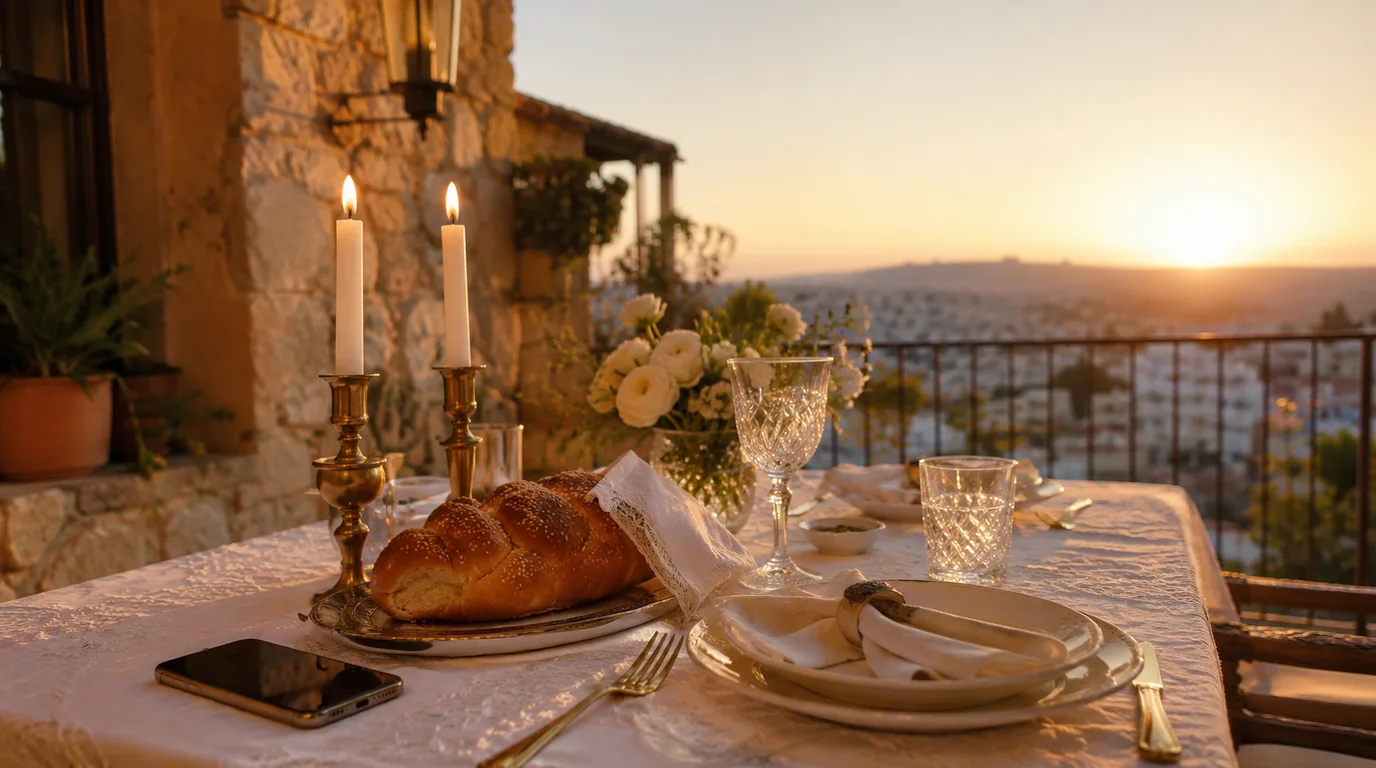
Abroad, Shavuot lasts two days; in Israel, one. In 2027 it is a Friday, so the holiday and Shabbat form a single block, from Thursday afternoon to Saturday night, without buses, trains or most shops.
Getting ready for your trip to Israel?
Pick a plan that matches how long you are staying, and arrive already connected.
- from $28.99Choose
Basic · 20 GB
7 to 60 days
- from $34.99Choose
Medium · 50 GB
Most popular - from $44.99Choose
Pro · 100 GB
7 to 60 days
- Israeli number included
- QR code on screen right after payment
- WhatsApp support
Lag BaOmer: bonfires and Mount Meron
Lag BaOmer, the 33rd day of the count between Passover and Shavuot, is a night of bonfires: on Monday 24 May they light up parks and beaches nationwide. Tuesday 25 May is a normal school day; shops and transport run.
- Mount Meron: the tomb of Rabbi Shimon bar Yochai in the Galilee draws the year's largest pilgrimage. Since the 2021 crush that killed 45 people, access is regulated (capped numbers, shuttle tickets, no private cars), and in 2026 police closed the roads for security reasons. Check the 2027 instructions.
- Bonfires: in 2026 they were allowed only at designated sites; follow your municipality's rules.
- Air quality: the smoke makes the air much worse that night. With asthma or small children, keep the windows closed.
Jerusalem Day 2027: Thursday or Friday?
Jerusalem Day (Yom Yerushalayim) marks June 1967, when Israel took control of the Old City and East Jerusalem. It falls on 28 Iyar, Friday 4 June in 2027. In 2023 and 2026, when it also fell on a Friday, the celebrations moved to Thursday to avoid Shabbat, so expect them on Thursday 3 June.
- The flag march: tens of thousands of mostly young marchers walk from the city centre to the Western Wall, many through the Damascus Gate and the Muslim Quarter, under heavy police presence; it has often been a moment of tension.
- Traffic: in recent years, central streets closed from early afternoon and the light rail skipped stations near the Old City.
- It is not a day off. To visit the Old City calmly, go in the morning or on another day.
Shavuot: night study, dairy and first fruits
Shavuot celebrates the giving of the Torah and the wheat harvest. In Israel, that means:
- Tikkun Leil Shavuot: a night of study in synagogues and cultural venues, often until dawn.
- In Jerusalem, crowds walk through the night to pray at the Western Wall at sunrise, tens of thousands strong.
- Dairy meals: cheesecake, blintzes and quiches.
- First-fruits (bikkurim) ceremonies in kibbutzim, with decorated tractors and children in white wearing flower wreaths.
- Water fights, a custom brought by Jews from North Africa: keep your phone in a waterproof pouch.
What closes over the holiday weekend
- Shops and phone stores: they close early on Thursday afternoon and most stay shut until Saturday night; in Arab towns and East Jerusalem, many stay open.
- Public transport: buses and trains stop on Thursday afternoon (in 2025, the last trains on the eve ran around 5 p.m.) and resume on Saturday night. Tel Aviv and Ramat Gan have run weekend shuttles.
- Ben Gurion Airport: open; many foreign airlines fly.
- Hotels: many Israelis make it a long weekend; book early in the north, at the Dead Sea and in Eilat.
Summer is starting: days are hot, especially at the Dead Sea and in Eilat, so hike early and carry water. The school year ends on 20 June for secondary schools and 30 June for primary schools, and July and August are the peak months for domestic travel.
Staying connected from Lag BaOmer to Shavuot
- 1Buy and install your eSIM before Thursday 10 June, ideally before you fly, on Wi-Fi: the QR code appears as soon as payment goes through, with a copy by email.
- 2Keep your usual line for bank codes: on a dual-SIM phone, the eSIM handles Israeli data while your home number receives your bank's texts.
- 3Before Meron, the flag march or a dawn walk to the Western Wall, download offline maps and agree on a meeting point: in dense crowds, data slows down.
- 4Use your Israeli number, included in every plan, to book a guesthouse, order groceries before Thursday or call a taxi.
- 5Heat drains batteries: carry a power bank, and share your connection if someone runs low.
Two days without phones
In many observant homes, phones stay off from Thursday evening to Saturday night. If you are a guest, make your video call to family abroad on Thursday afternoon and step outside to take calls.
Which plan for this season
- A week around Shavuot: a short-trip plan covers maps, messaging, photos and calls.
- From Lag BaOmer to Shavuot, or longer: choose a plan that covers your whole stay, so you are not topping up on the holiday weekend.
- Living in Israel: a monthly plan with no commitment keeps the same Israeli number all year, and you can bring your current number.
Every prepaid plan includes 4G/5G data on the Partner network, a real Israeli (+972) number and unlimited calls and texts in Israel. An AI assistant answers on WhatsApp at any hour; advisers are available Sunday to Thursday 9:30–19:30 and Friday 9:30–14:00 (Israel time), except on Shabbat and Jewish holidays.