In 2027, Hanukkah lines up with the busiest week of Israel's winter: the first candle falls on Christmas Eve, the eighth on New Year's Eve, and both on a Friday, just before Shabbat. Israeli families on school holiday, Christian pilgrims and New Year travellers all move in the same eight days, so hotels, flights and roads fill early.
Hanukkah 2027 dates in Israel
| Date | Day | What it means in practice |
|---|---|---|
| Friday 24 December | First candle; Christmas Eve | Candles lit before Shabbat begins, around 4 pm. Shops close early; buses and trains stop before sunset. |
| Saturday 25 December | First day; Shabbat and Christmas Day | No public transport, most shops closed. Second candle after nightfall, once Shabbat ends. |
| Sunday 26 – Thursday 30 December | Hanukkah weekdays | Normal working days. Schools are usually on holiday, so attractions are busy. |
| Friday 31 December | Eighth candle; New Year's Eve | Last candle lit before Shabbat. Not a holiday, but buses and trains stop in the afternoon. |
| Saturday 1 January 2028 | Eighth day; Shabbat and New Year's Day | Shabbat closures. Hanukkah ends at nightfall. |
Two Fridays, two Shabbats
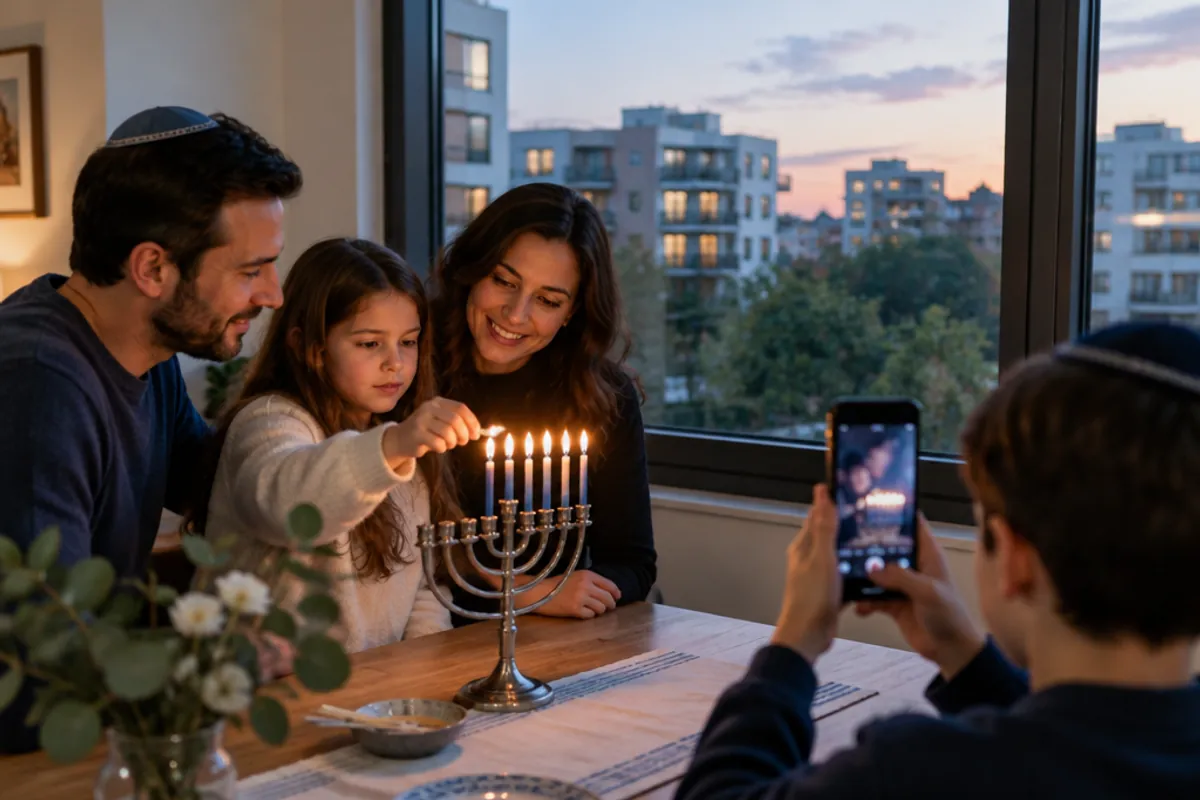
Hanukkah candles are never lit on Shabbat itself. On both Fridays, families light the menorah first, then the Shabbat candles, with enough oil to burn past dark. On Saturday 25 December, the second candle waits until Shabbat is over. The first candle last fell on Christmas Eve in 2016.
Getting ready for your trip to Israel?
Pick a plan that matches how long you are staying, and arrive already connected.
- from $28.99Choose
Basic · 20 GB
7 to 60 days
- from $34.99Choose
Medium · 50 GB
Most popular - from $44.99Choose
Pro · 100 GB
7 to 60 days
- Israeli number included
- QR code on screen right after payment
- WhatsApp support
What Hanukkah is, in a few lines
Hanukkah, the Festival of Lights, recalls the rededication of the Temple in Jerusalem by the Maccabees in the second century BCE. Tradition tells of a single jar of pure oil that burned for eight days — hence eight nights of lights on a nine-branched menorah, the hanukkiah, with one more candle each evening. It is a joyful family festival, and anyone is welcome at a public lighting.
Is Hanukkah a day off? What is open and closed
Hanukkah is not an official day of rest, and neither Christmas Day nor 1 January is a public holiday in Israel. In 2027, the closures you will notice come from Shabbat.
- Weekdays (26–30 December): shops, banks, offices and public transport run normally.
- Fridays 24 and 31 December: shops close in the early afternoon; buses and trains stop before Shabbat and restart after nightfall on Saturday. In Tel Aviv and nearby cities, free municipal weekend buses (Naim Busofash) run some routes.
- Schools: usually off for most of the week (the 2027–2028 school calendar is not published yet).
- Christmas: celebrated by Christian communities in Nazareth, Haifa and Jerusalem's Old City.
- Ben Gurion Airport: open throughout; many foreign airlines fly on Shabbat.
Hanukkah, Christmas and New Year at once
Late December is already high season: in 2027, book flights, rooms and airport transfers early.
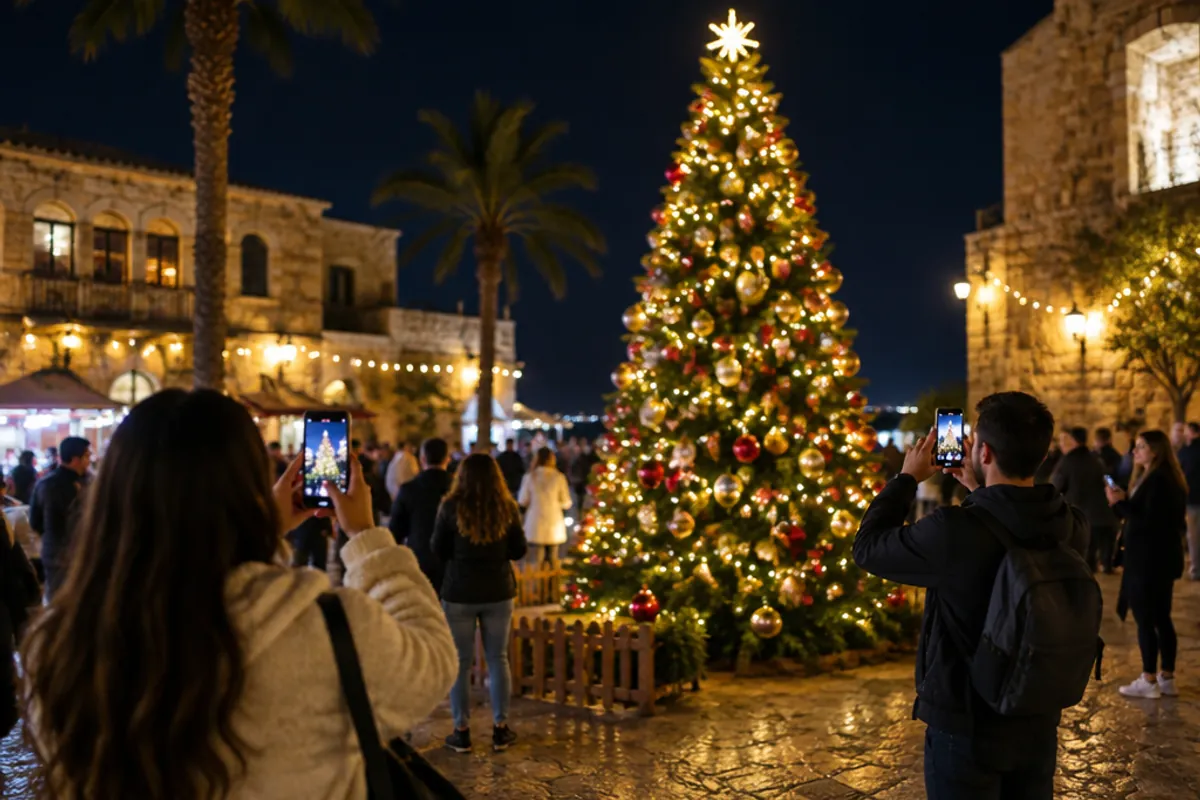
- Jerusalem: pilgrims fill the Christian Quarter of the Old City for Christmas while the Jewish Quarter glows with menorahs. Evenings can be cold and wet.
- Nazareth: home to Israel's largest Arab Christian community, with a Christmas market and a parade traditionally held in the days before Christmas.
- Haifa: the Holiday of Holidays festival, around Wadi Nisnas and the German Colony, has celebrated Hanukkah and Christmas together every December for decades.
- Eilat and the Dead Sea: busy with Israeli families on the school break, and milder than Jerusalem.
- New Year's Eve: Tel Aviv's bars and clubs party as on any Friday night — but without trains or intercity buses to get home.
Candles, doughnuts and where to see the lights
- Public lightings: every evening of Hanukkah, the Western Wall Heritage Foundation lights a large menorah on the Western Wall Plaza, in the afternoon on Fridays. Many cities light giant menorahs in their main squares.
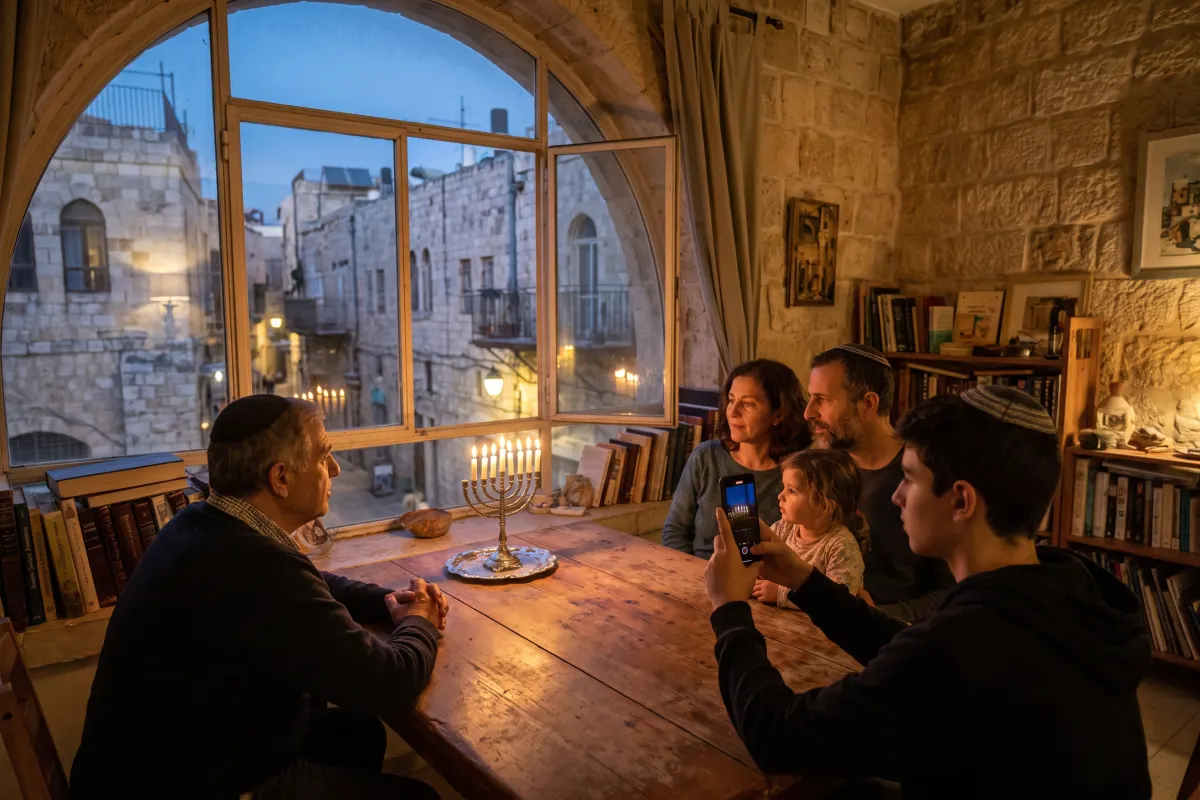
- Lights in glass boxes: in Jerusalem's older neighbourhoods, such as Nachlaot, families light oil menorahs outside their doors in glass cases that shelter the flames — a lovely evening walk.
- Sufganiyot and latkes: jam doughnuts and potato pancakes, both fried in oil in memory of the miracle.
- The dreidel: in Israel its letters read "a great miracle happened here"; everywhere else, "there".
Staying connected over Hanukkah
- 1Install your eSIM before you fly, on Wi-Fi. The QR code appears on the confirmation page as soon as payment goes through, with a copy by email — handy when phone shops close from Friday afternoon to Saturday night.
- 2Keep your usual line for bank codes: on a dual-SIM phone, the eSIM handles Israeli data while your home number still receives your bank's texts.
- 3Plan video calls around the candles: on both Fridays the lighting happens in the late afternoon, Israel time, so agree on the time with family abroad in advance.
- 4Use your Israeli number — included in every plan — to book restaurants, hotels and taxis in a fully booked week.
- 5Download offline maps and agree on a meeting point before a crowded lighting or a New Year's Eve party, when networks are busiest.
Lighting with family far away?
Set the phone up before you light: check the camera angle, plug in the charger and send the link a few minutes early. In observant homes, phones are put away once Shabbat begins, so on both Fridays call before candle lighting and keep the long chat for Saturday night.
Which plan for a Hanukkah trip
- A week over Hanukkah: a short-trip plan covers maps, messaging, photos and video calls.
- Staying from Christmas through New Year and beyond: choose a longer plan so you are not topping up on a Shabbat.
- Living in Israel: a monthly plan with no commitment keeps the same Israeli number all year, and you can bring your current number.
Every prepaid plan includes 4G/5G data on the Partner network, a real Israeli (+972) number and unlimited calls and texts in Israel. An AI assistant answers on WhatsApp at any hour; advisers are available Sunday to Thursday 9:30–19:30 and Friday 9:30–14:00 (Israel time).